
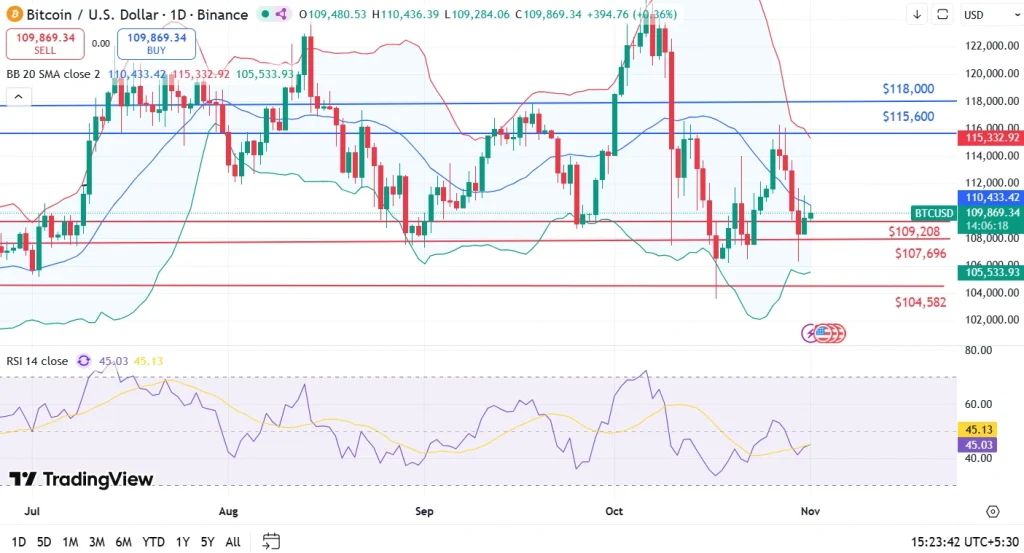
The global cryptocurrency market is once again facing turbulence as a wave of large-scale liquidations ripples through the ecosystem. According to a live-update report for November 5 2025, the after-effects of a major liquidation event on October 10 are still being felt: many traders and funds that survived the initial crash appear to be quietly exiting positions, raising concerns that the market’s recovery may be delayed. Coinpedia Fintech News
At the same time, significant whale-activity is being observed. Notably:
- A wallet associated with Richard Heart moved 27,449 ETH through a mixing service (Tornado Cash), raising speculation about strategic accumulation or repositioning. Coinpedia Fintech News
- Another major holder repaid a 66,000 ETH loan, then withdrew 34,155 ETH (~$111.6 million) from Binance, possibly to buy the dip. Coinpedia Fintech News
- A newly formed wallet (linked to Bitmine) pulled 10,000 ETH (~$32.7 million) from Kraken, adding to signals of accumulation. Coinpedia Fintech News
What this means
- The ongoing exits and clean-ups could mean the market is in a “clean-out” phase: weaker hands being shaken out, which might be a precursor to a consolidation or recovery if new buyers step in.
- The large whale moves indicate that sophisticated players might view current prices as opportunistic — though when they’ll act (and whether they succeed) remains uncertain.
- For retail investors: this moment suggests caution. Volatility remains high, and the interplay between liquidation cascades and large holder moves can create rapid, sharp swings.
Outlook
With seller exhaustion nearing, the key will be whether a new wave of buying materializes to stabilize prices. The large-holder accumulation might provide some upside potential — but only if broader confidence returns. Until then, turbulence and risk remain elevated.
Would you like to dive deeper into a specific asset (e.g., Ethereum, Bitcoin) or region’s response to these movements?